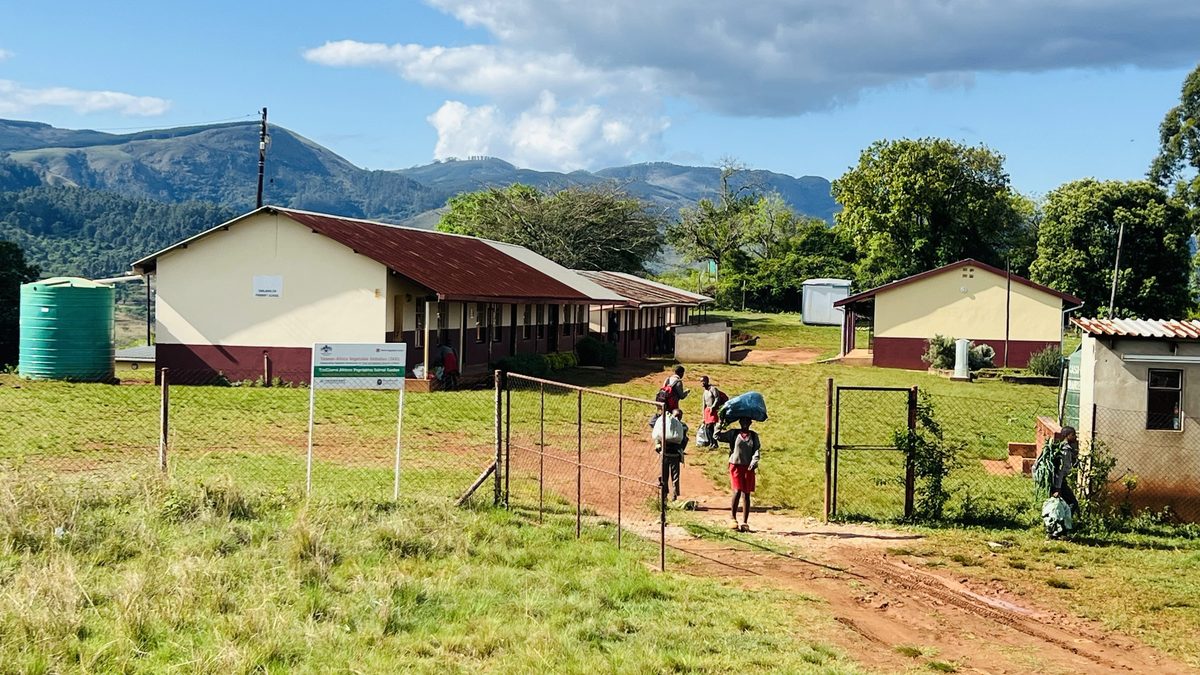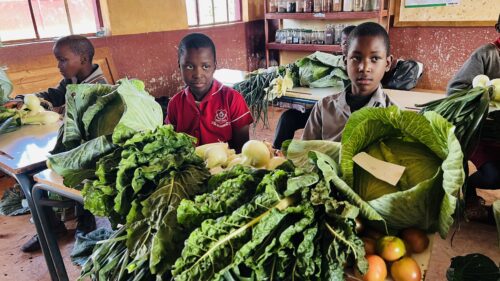

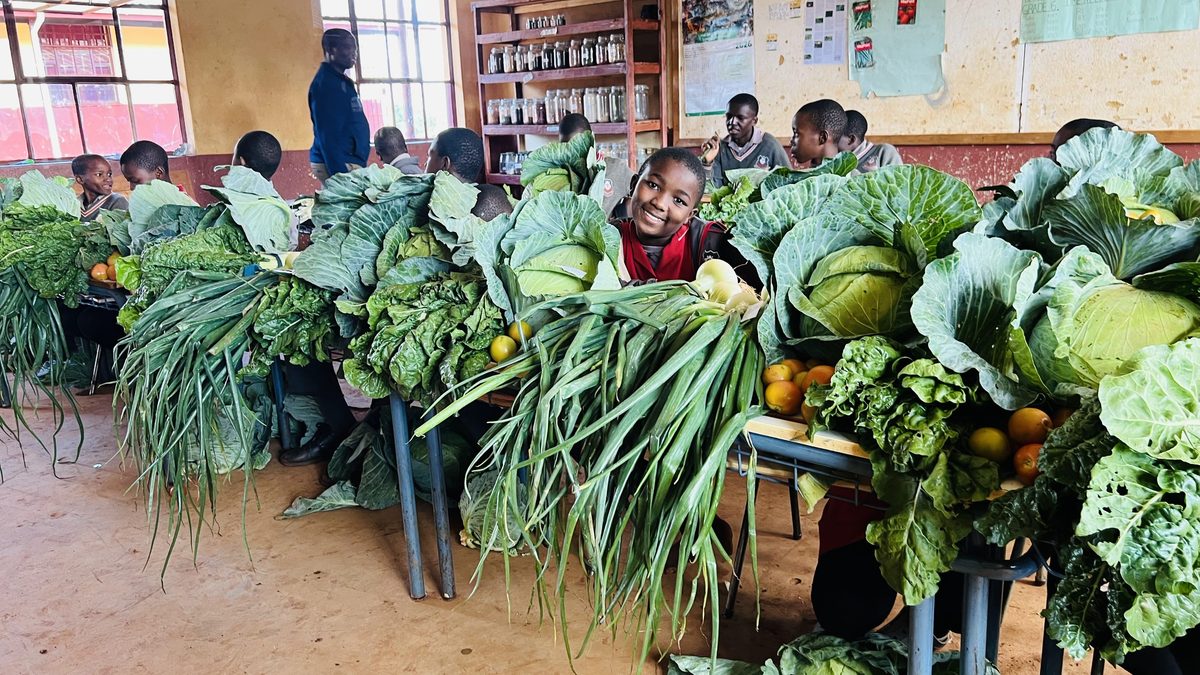
Learners at a rural Northern Hhohho school now grow enough vegetables to supply their school feeding programme and take produce home to their families. They credit the change to Sakata hybrid seeds donated by SAS Eswatini.
BY: SIBUSISO MNGADI
NTFONJENI – A school garden at Enhlanhleni Primary School in Northern Hhohho is producing more vegetables than at any time in its history. Teachers and learners say the turnaround came after the school replaced the open-pollinated seed it had used for years with high-performing hybrid varieties donated by SAS Eswatini.
The school received 1,000 seeds each of three Sakata hybrids, Hoshi onion, Conquistador cabbage and MFH7032 tomato, along with Swiss chard. Agribusiness Media visited the school this week to see the results.
The harvest has been strong. The garden now fully supplies the school feeding programme, with a surplus that learners take home to their families.
“Different produce, better yields”
Agriculture teacher Musa Maseko said the difference between the hybrids and the seed the school had used for years was clear early in the season.
“The produce is different. The hybrids give us far more yield than the open-pollinated seeds we have been using for many years,” he said.
Every learner is given a row to plant and look after. Maseko said this approach has built a strong sense of ownership and pride in the garden.
“Each child is given a line to plant, and the results have been impressive. Our garden is now able to supply the school feeding programme, and there are leftovers that the children take home to their families,” he said.
He urged other schools to follow Enhlanhleni’s example.
“I encourage other schools to learn from our experiment and try the hybrid seeds. They will see the difference for themselves.”
Better nutrition, better concentration
For the learners, the benefits go well beyond the garden.
The children told us that eating more vegetables has given them more energy and that they now concentrate better in class. Many also take produce home to feed elderly relatives, including grandmothers and uncles. In this way, a school project has become a source of household food security for families across the Ntfonjeni community.
The school’s experience supports what development practitioners have long argued: school gardens are about more than teaching agriculture. When they are well run, they can improve nutrition, support learning and strengthen family wellbeing at the same time.
Programme to expand nationwide
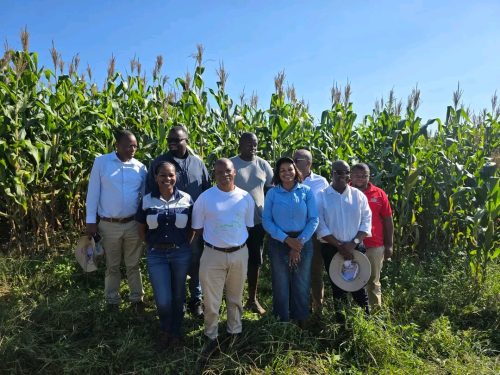
SAS Sales and Technical Coordinator Sifiso Dlamini, an agronomist with more than two decades of experience in farmer development, said the programme would be extended to other schools.
“These hybrid seeds will be introduced to other schools across the country. We are still identifying which schools will be part of the programme,” Dlamini said.
THE VARIETIES: WHAT ENHLANHLENI PLANTED
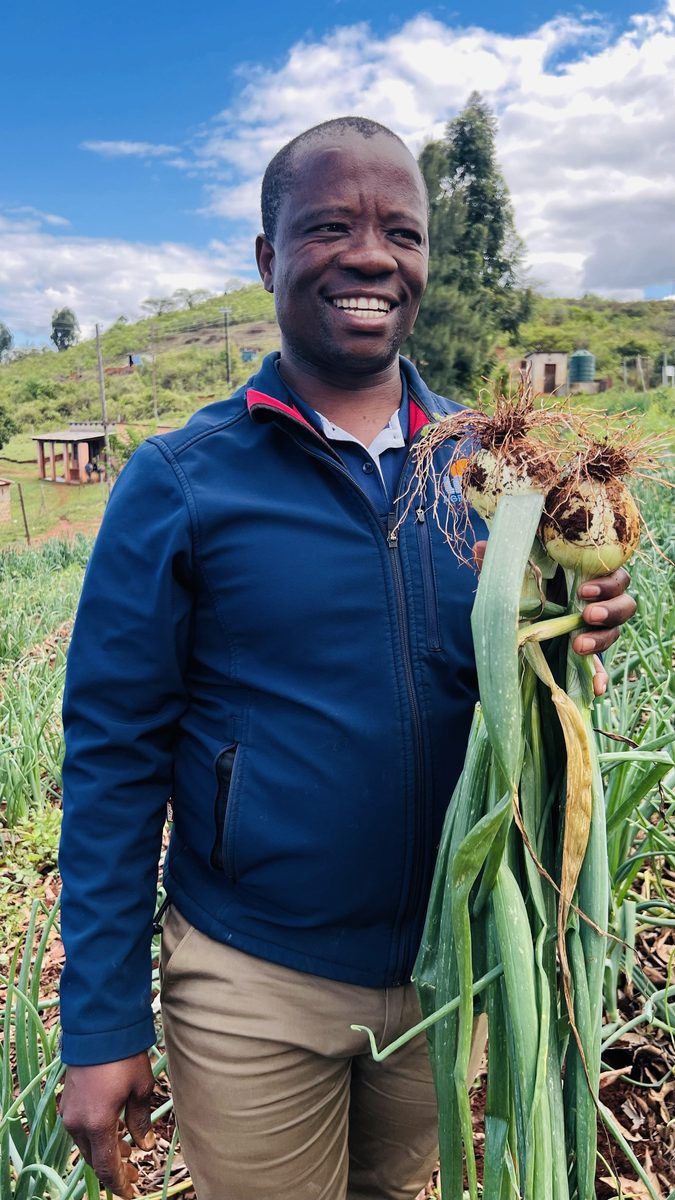
Hoshi onion (Sakata, F1 hybrid). Hoshi is a mid-season, short-day yellow onion. It produces firm, uniform, globe-shaped bulbs with neat, thin necks, and it grows vigorously with high yield potential and good tolerance to bolting. It is also highly resistant to two damaging soil-borne fungal diseases, pink root and Fusarium basal plate rot.
Conquistador cabbage (Sakata, F1 hybrid). Conquistador is one of the leading cabbage varieties in Southern Africa. It is widely adapted and easy to grow, and it produces uniform, very firm heads with a deep blue-green colour. Hawkers favour it for its large plant, protective wrapper leaves, sweet taste and long shelf life. Heads typically weigh between 4kg and 5.5kg. In Kenya, one smallholder reported that his marketable yield rose to 85%, up from 50–65%, after he switched to Conquistador.
Esty tomato (Sakata, F1 hybrid). Esty is a locally bred indeterminate salad tomato with high fruit quality and very good shelf life. Its uniform fruit size and strong disease package make it a reliable all-round tomato. It is highly resistant to Verticillium wilt, Fusarium wilt, tomato mosaic virus, leaf mould and root-knot nematodes, and has intermediate resistance to tomato curly stunt and tomato yellow leaf curl, two viruses spread by whiteflies. Its long shelf life means less waste between the garden, the school kitchen and learners’ homes.
Swiss chard (Sakata). Swiss chard is widely known in Southern Africa as “spinach”. It is an open-pollinated, cut-and-come-again leafy green and a dependable staple for school feeding schemes, because its leaves can be harvested repeatedly over many weeks.
HOW HYBRID SEEDS DELIVER BIGGER YIELDS
What is a hybrid seed?
A hybrid seed, labelled “F1” on the packet, comes from a controlled cross between two carefully selected parent plants. F1 stands for “first filial generation”, the first generation produced from that cross. Seed companies spend years developing each parent line so that the cross combines the best traits of both.
Open-pollinated varieties work differently. They are pollinated naturally by wind, insects or the plant itself, and farmers can save their seed from one season to the next. That is why so many Swazi homesteads and schools have used them for generations.
The science: hybrid vigour
The yield advantage comes from a natural effect called hybrid vigour, or heterosis. When two different parent lines are crossed, the first-generation offspring is often much more vigorous than either parent. This shows up as faster growth, greater uniformity, earlier flowering and higher yield, and higher yield is what matters most to farmers.