BY: PHESHEYA KUNENE | EDITOR
MALKERNS — Eswatini grain farmers preparing for the 2026/27 planting season are heading into a potentially difficult weather season, making decisions taken before planting increasingly important.
The latest international outlook is significant. The World Meteorological Organization (WMO) confirmed on 3 September that El Niño is firmly established and expected to strengthen further, with a nearly 100% probability that it will persist through February 2027. The organisation expects the event to reach very strong intensity before peaking towards the end of 2026.
For farmers, however, this should trigger preparation rather than panic. A strong El Niño does not automatically mean every farm or region will experience the same rainfall conditions.
In Eswatini, the message from agricultural and weather experts increasingly points in the same direction: protect the soil, conserve available moisture, choose seed carefully, diversify where practical and follow updated weather information before planting.
One of the practical options is Conservation Agriculture (CA), built around minimum soil disturbance, permanent organic soil cover and crop diversification.
WHAT THE WEATHER EXPERTS ARE SAYING
The weather outlook has become more serious as the planting season approaches.
The Eswatini Meteorological Service, as reported by the Times of Eswatini on 4 September, is forecasting a very strong El Niño between October 2026 and March 2027.
The outlook indicates that Eswatini is likely to experience slightly warmer than normal conditions between October and December, while maximum temperatures in eastern parts of the country are expected to average between 28°C and 35°C.
Importantly, local meteorologists have cautioned against simply assuming that the coming season will be a repeat of the devastating 2015/16 drought. El Niño increases the risk of unusual rainfall and temperature patterns, but its strength alone does not determine exactly how much rain will fall in a particular location.
The WMO makes the same point.
Its latest forecast says the current El Niño has an exceptionally high, nearly 100% likelihood of continuing through February 2027, supported by unusually warm tropical Pacific Ocean conditions.
WMO expects El Niño to strengthen to very strong intensity before peaking towards the end of 2026. Its September to November outlook also indicates an increased likelihood of above normal temperatures across almost all land areas globally.
But WMO stresses that even a very strong El Niño does not produce identical impacts everywhere. Rainfall outcomes are affected by location, season and other climate drivers, including conditions in the Indian and Atlantic oceans.
For local farmers, that makes continued monitoring of the Eswatini Meteorological Service’s seasonal and short term forecasts critical.
The message is therefore not that drought on every farm is guaranteed. It is that the risk is now serious enough for farmers to prepare before the weather determines the outcome for them.
DISTURB THE SOIL LESS
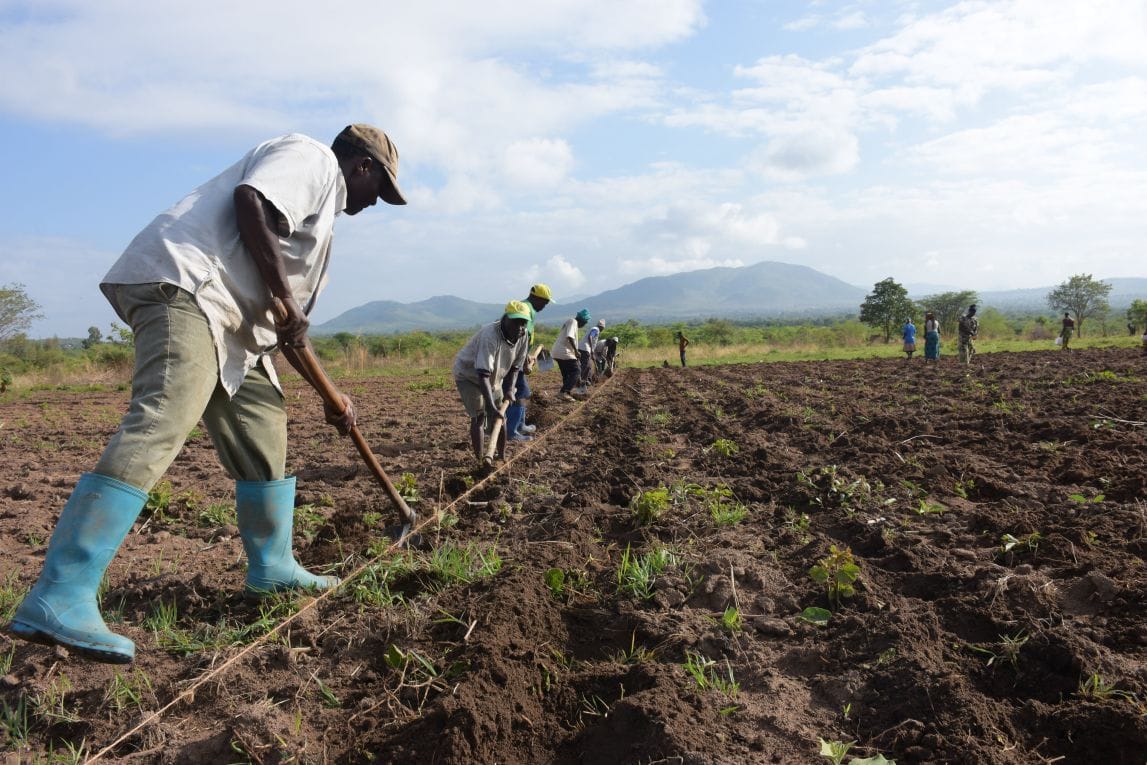
Agronomist Sabelo Lukhele of Malkerns Research Station has been demonstrating conservation farming approaches such as Pfumvudza, where crops are established with limited soil disturbance rather than repeatedly ploughing an entire field.
«“On time, at standard, without wastage and with joy,” Lukhele explained when taking Agribusiness Media through the principles farmers should follow when implementing the system.»
Instead of unnecessarily turning over an entire field, farmers can use appropriate planting stations, basins or ripping systems suited to their soils and farming conditions.
FAO identifies three central principles of Conservation Agriculture: minimum mechanical soil disturbance, permanent organic soil cover and crop diversification.
The objective is not simply to stop ploughing. Farmers need a complete system adapted to their soil, rainfall, crops and available equipment.
KEEP THE SOIL COVERED
The next drought fighting tool could already be lying in the field.
Suitable maize stalks, dry grass and other crop residues can provide protective cover instead of leaving the soil completely exposed.
According to FAO guidance, organic soil cover can help reduce evaporation, moderate soil temperatures, limit runoff and improve water infiltration.
This becomes particularly important when rainfall is erratic. A farmer cannot increase the amount of rain falling from the sky, but can improve the chances of keeping more of that water in the field.
There is a practical challenge for mixed farmers. Crop residues are also valuable livestock feed. Farmers therefore need to balance livestock requirements with retaining sufficient material to protect their soil.
CHOOSE SEED FOR THE SEASON
Water conservation alone cannot rescue a crop planted with unsuitable seed.
Malkerns Research Station houses Eswatini’s Seed Quality Control Services, which works to ensure farmers have access to good quality seed of locally adaptable improved varieties under the country’s seed regulatory system.
Farmers should therefore look beyond price when buying seed.
Seed quality, suitability to the production area and maturity period become especially important when rainfall could be uncertain.
Where suitable and where markets exist, farmers can also consider diversifying beyond maize into crops such as sorghum, millet, cowpeas, beans and groundnuts.
Crop diversification is one of the pillars of Conservation Agriculture, while legumes can contribute to soil fertility when properly incorporated into crop rotations.
DON’T CHASE THE FIRST CLOUD
One of the biggest dangers during an uncertain season is confusing the first significant shower with the proper establishment of seasonal rainfall.
Planting into false early rains could leave newly germinated crops exposed to moisture stress if another prolonged dry period follows.
Farmers should therefore pay close attention to official weather forecasts and work with local extension officers when making planting decisions.
This is particularly important given the current El Niño outlook.
Do not plant simply because the calendar says it is planting time. Plant when soil moisture, weather information and agronomic conditions support the decision.
KNOW YOUR SOIL BEFORE YOU FERTILISE
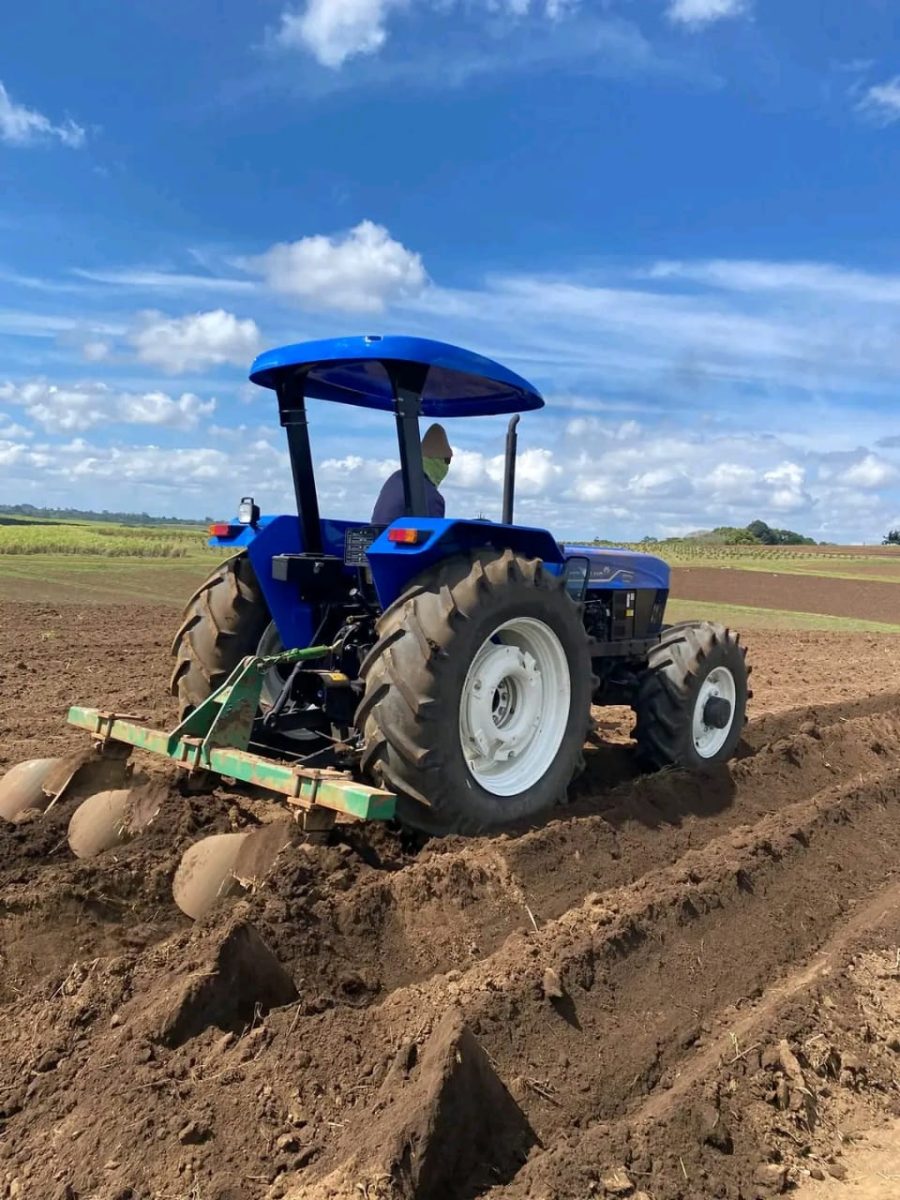
Drought preparation should also not be interpreted as abandoning fertiliser.
Malkerns Research Station specialists have repeatedly emphasised the importance of understanding soil conditions before making major fertiliser or liming decisions.
Soil testing helps farmers understand factors such as pH and the availability of important nutrients, allowing fertiliser and soil amendments to be used more effectively.
During a season when moisture could become limiting, unnecessary or poorly timed input expenditure can become particularly costly.
Nutrient decisions should therefore consider soil test results, crop requirements and available soil moisture.
MAKE THE RAIN STAY WHERE IT FALLS
If rainfall becomes scarce or erratic, the amount of water that actually enters and remains in the soil becomes critical.
Appropriate conservation measures can reduce runoff and improve infiltration, allowing the soil to function as a natural reservoir.
That is why minimum disturbance and soil cover work together.
Farmers cannot control the clouds, but they can influence what happens to the water after it reaches their fields.
CONSERVATION AGRICULTURE IS NOT DROUGHT INSURANCE
There is an important warning.
No farming method can manufacture rainfall, and Conservation Agriculture cannot guarantee a harvest during severe drought.
Minimum disturbance without proper weed control could leave weeds competing with crops for scarce moisture. Mulching cannot compensate for poor seed, unsuitable planting dates, inadequate fertility management or poor crop protection.
Conservation Agriculture should therefore be understood as a complete farming system rather than a collection of isolated tricks.
Its advantage during a potentially dry season is that it can help farmers make better use of the rainfall they actually receive.
FARMER’S EL NIÑO CHECKLIST
Before putting seed into the ground, farmers should ask:
Is my seed suitable for my area?
Is the maturity period appropriate for the expected season?
Is my soil protected or completely bare?
How will I reduce runoff and conserve moisture?
Have I tested my soil?
Am I following the latest Eswatini Meteorological Service forecast rather than relying only on the calendar?
Can I diversify some of my production into other suitable crops?
What is my plan if the rain stops for several weeks after planting?
Those questions are easier and cheaper to answer before planting than when a crop is already under moisture stress.
The latest El Niño outlook gives farmers a reason to act early, but not a reason to assume failure.
The objective is simple: prepare the farm for uncertainty.
For Eswatini’s grain farmers, one of the most important water reservoirs this season may not be a dam or tank.
It may be the soil beneath their feet.
Disturb it less. Keep it covered. Diversify. Choose seed carefully. Follow the forecast. Make every drop count.