BY: PHESHEYA KUNENE| EDITOR
EZULWINI — Africa’s first Seed Summit has ended in Eswatini with a simple challenge hanging over governments and development partners: quality seed must move from policy documents, research stations and conference halls into farmers’ fields.
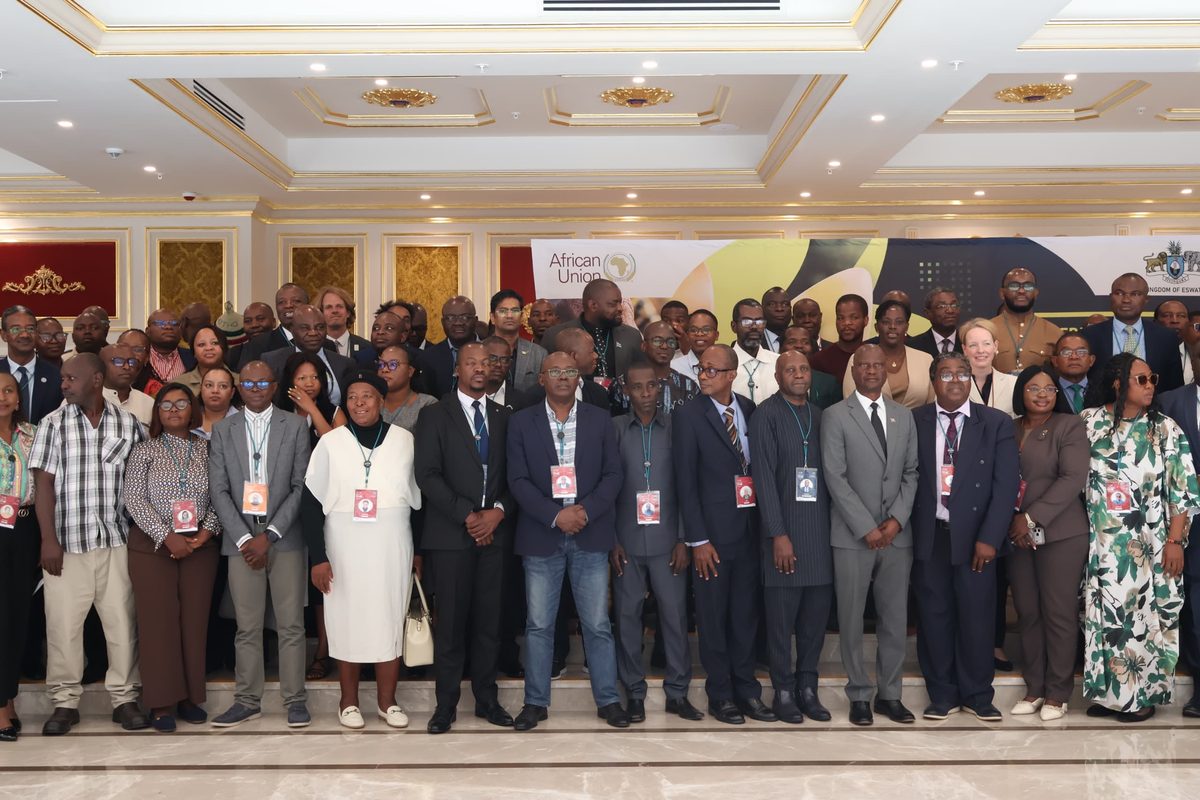
Held from 5–7 October under the theme “Resilient Seed Systems for a Food Secure Africa,” the summit brought together governments, farmers’ organisations, researchers, seed companies, investors and development partners to address one of African agriculture’s most persistent problems: farmers cannot increase production if suitable seed is unavailable, unaffordable or arrives too late.
The African Union says more than 500 improved varieties of key crops were released across Africa between 2022 and 2024, offering characteristics including higher yields, early maturity, improved nutrition and tolerance to pests and diseases.
Yet access remains uneven. While certified improved seed use exceeds 70% for some crops in some countries, the AU says usage for many legumes, roots and tubers remains below 5%.
That is the gap Ezulwini was meant to confront.
GOOD POLICY, WEAK DELIVERY
The problem is not necessarily a shortage of policy.
The 2025 African Seed Sector Performance Index illustrates the disconnect. An analysis published during the summit notes that ECOWAS countries scored 8.05 out of 10 for national seed-policy frameworks, but only 2.63 on whether quality seed actually reaches farmers.
African Union Commission Deputy Chairperson Ambassador Selma Malika Haddadi told delegates that farmers in many rural communities still struggle to obtain quality seed at the right time, in adequate quantities and at affordable prices.
She said climate change makes the problem more urgent as droughts, floods, pests and diseases increase demand for locally adapted, stress-tolerant and climate-resilient varieties.
For farmers, therefore, the test is not how many varieties breeders release. It is how many reach the farm.
INVESTMENT MUST FOLLOW THE SEED
The summit identified investment across the seed value chain as a priority, including plant breeding, research, testing laboratories, certification, extension and market development.
Private seed businesses will also need room to grow.
The AU wants governments to create regulatory environments capable of attracting responsible private investment while expanding public investment in seed systems. Regional harmonisation could further allow seed approved in one market to move more efficiently into another.
The summit also launched the 2025 Seed Sector Performance Index, intended to provide a standard framework for assessing national seed sectors and monitoring progress over time.
WHAT IT MEANS FOR THE FARMER
For Eswatini, the opportunity is practical.
Stronger local seed multiplication could reduce dependence on external supply. Better research could produce varieties suited to local soils and increasingly difficult climatic conditions. Stronger agro-dealer networks could improve last-mile availability, while regional standards could create larger markets for local seed producers.
But seed alone will not deliver a harvest.
As FAO stressed during the summit, improved seed must operate within a wider agricultural system that includes extension, healthy soils, water management, finance and reliable markets.
That leaves Africa with a straightforward measure of success.
Not another declaration.
Not another variety sitting in a catalogue.
But a farmer entering the planting season able to find the right seed, at the right price, at the right time, for the conditions in which that crop must grow.
That is where the real seed summit begins.