
BY: PHESHEYA KUNENE | EDITOR
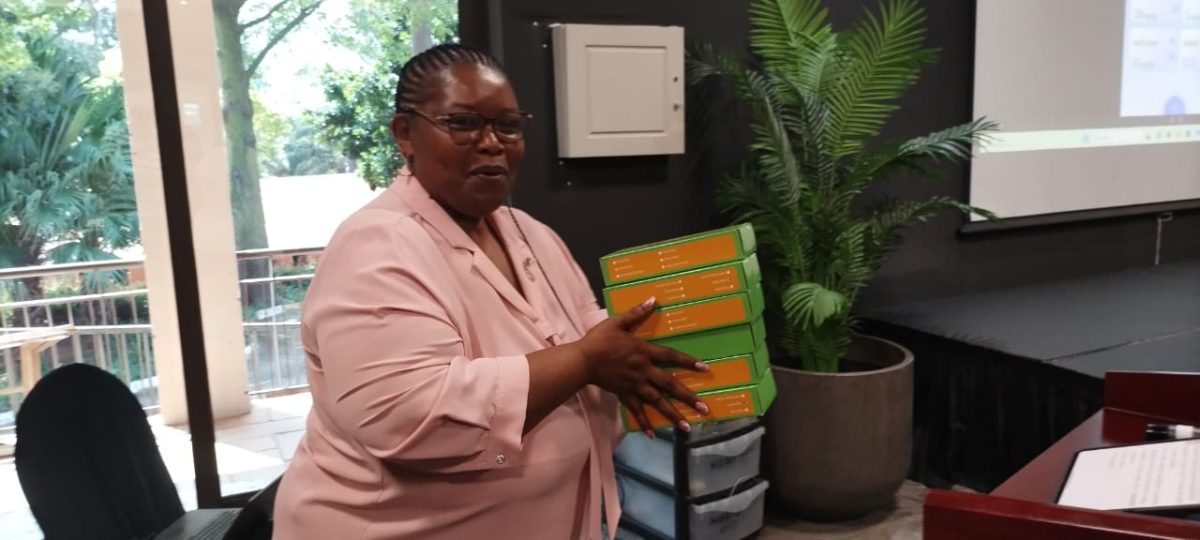
EZULWINI — Farmers across Eswatini could soon have faster access to information about the condition of their soil following the donation of 20 digital soil testers worth E11 680 by the National Maize Corporation (NMC) to the Ministry of Agriculture.
The devices are expected to be distributed to Rural Development Areas (RDAs) across the country, bringing rapid soil assessment closer to farming communities and addressing complaints from farmers about travelling for soil testing and waiting for results.
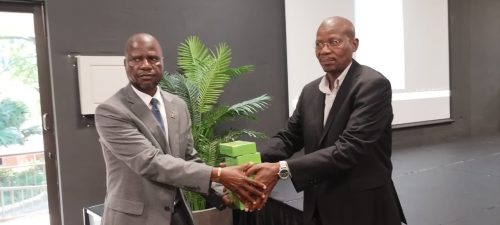
The handover took place at Happy Valley Hotel in Ezulwini, where Agriculture Minister Mandla Tshawuka said it was time for Eswatini’s agricultural sector to advance its use of modern technology.
For farmers, the significance of the donation is not simply that soil can be tested faster. If the technology is properly deployed alongside extension services, it could change when farmers obtain information about their fields and how they use that information before investing in seed, fertiliser and other inputs.
SOIL TESTING MOVES CLOSER TO THE FARM
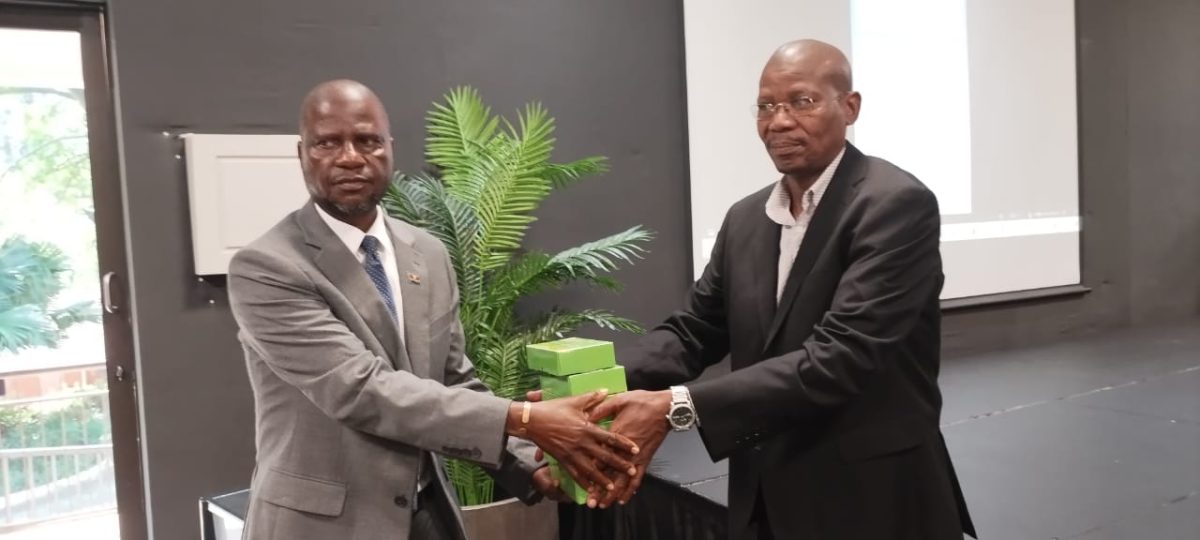
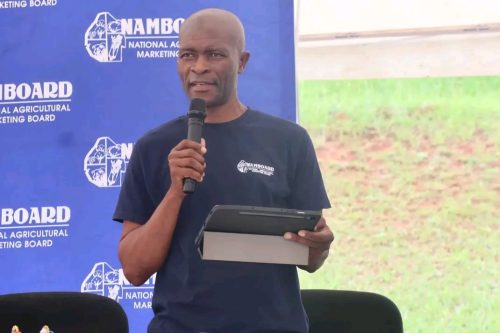
NMC Chief Executive Officer Velaphi Vilane said the corporation has already been using the devices and decided to respond after hearing concerns from both farmers and the Ministry.
He demonstrated how farmers can use the technology with smartphones to access soil information and indicated that NMC could consider providing additional devices.
The immediate attraction is speed.
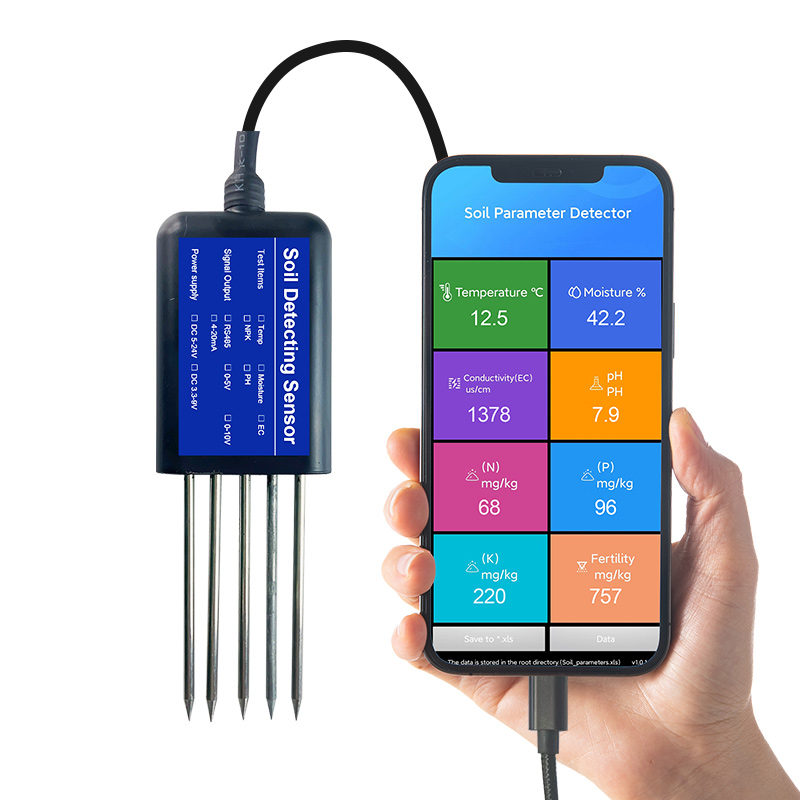
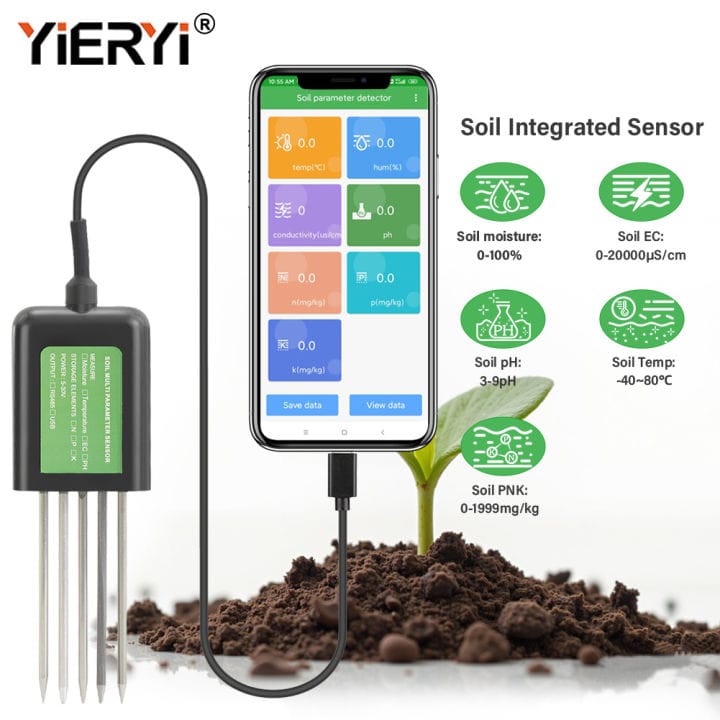
Portable digital soil testing technology can provide rapid field readings of selected soil characteristics. Depending on the particular model and sensors installed, such devices can measure indicators including pH, moisture, temperature and electrical conductivity.
However, Agribusiness Media could see itnot independently establish the full technical specifications of the 20 devices donated by NMC. It would therefore be premature to claim that these particular units measure every parameter available on more advanced multiparameter soil probes.
What is clear is the intention: to give farmers and extension officers faster information closer to where farming actually happens.
WHY SOIL TESTING MATTERS
The Ministry of Agriculture already places soil testing at the centre of sound crop management.
According to the Ministry’s Soil Testing Unit, its laboratory analyses soil for pH, exchangeable acidity, macro and micronutrients and uses the results to make lime and fertiliser recommendations. The unit is also responsible for training extension personnel and farmers in soil fertility management.
The Ministry’s own Soil Sampling Manual makes the connection even clearer: proper soil sampling enables farmers to obtain accurate fertiliser and lime application rates based on test results.
That matters economically.
Fertiliser, seed, labour, irrigation and crop protection represent significant investments for a farmer. Applying nutrients without sufficiently understanding the soil can mean spending money on inputs that are poorly matched to conditions in a particular field.
Soil pH is particularly important because it affects nutrient availability. Testing can therefore help identify whether soil conditions need correction before or during production.
The new devices could provide farmers with an earlier indication that something needs attention and allow extension officers to advise on whether further laboratory analysis is necessary.
FROM CENTRALISED TESTING TO THE RDAs
The decision to distribute the devices through RDAs could ultimately prove more important than the technology itself.
It takes soil information closer to farmers.
The Ministry says its Soil Testing Unit provides technical support on soil fertility and management across all four regions and trains extension personnel and farmers. The digital devices could strengthen that existing extension network by giving officers another practical diagnostic tool to use closer to production areas.
There is historical evidence that demand for soil testing in Eswatini can be substantial.
A Ministry of Agriculture annual performance report for 2017/18 recorded 8293 soil samples received by the Soil Testing Unit, of which 7689 were analysed and reported on. Five satellite laboratories received another 15 579 samples, although the report said only 3472 were analysed at functioning satellite facilities, while two laboratories were not operating because of shortages of equipment and chemicals.
Those figures are historical and should not be interpreted as representing the current workload. But they illustrate a longstanding challenge: when demand for soil analysis is high and testing capacity is constrained, getting information back to farmers can become difficult.
Portable technology at RDA level could provide another layer of support.
TSHWUKA: FARMING MUST MOVE WITH TECHNOLOGY
Receiving the devices, Tshawuka said it was time for farmers and the agricultural sector to advance in their use of technology and modern machinery capable of providing faster and more efficient results.
His argument reflects a broader shift taking place in African agriculture.
Agricultural technology is often associated with expensive tractors, drones, automated irrigation or satellite imagery. But agricultural modernisation can also happen through smaller technologies that improve everyday decisions.
A relatively inexpensive diagnostic tool could influence decisions involving much larger amounts of money in fertiliser, lime, seed and irrigation.
The African Development Bank has similarly identified agricultural technologies and healthy soils as important components of sustainable agricultural growth on the continent.
DLAMINI: AN ANSWER TO FARMERS’ CONCERNS
Acting Director of Agriculture Nikiwe Dlamini also backed the devices, describing them as an appropriate answer to concerns farmers have raised about soil testing.
She said improved access to soil information should help farmers make better production decisions and ultimately contribute towards better yields.
That expectation is reasonable, but there is an important qualification.
A soil test does not increase yields by itself.
Its value comes from what happens after the result: whether the farmer receives appropriate advice, whether the necessary lime or fertiliser is available and affordable, and whether recommendations are correctly implemented.
Recent evidence from elsewhere in Africa illustrates this point.
A 2026 study in Malawi involving more than 2000 farming households across 113 villages found that providing plot specific soil test recommendations alone did not significantly change fertiliser use, input choices or maize yields. The researchers concluded that soil information must be accompanied by solutions to practical constraints including input availability, farmer familiarity and implementation.
For Eswatini, that makes the RDA extension officer almost as important as the testing device.
FASTER TESTING, SAME SAMPLING RULES
Vilane also delivered an important warning during the handover: farmers should not change proper soil sampling methods simply because they now have a quicker testing solution.
That advice is scientifically important.
Soils can vary within the same farm and even within the same field. A reading taken from one poorly selected spot may not represent conditions across the area being planted.
The Ministry’s Soil Sampling Manual therefore requires farmers to follow appropriate sampling procedures so that results can support accurate fertiliser and lime recommendations.
The digital tester may shorten the time required to obtain a reading.
It does not eliminate the need to collect the right sample.
RAPID TESTING SHOULD COMPLEMENT THE LAB
The introduction of portable devices should also not be interpreted as the end of laboratory soil testing.
The Ministry’s laboratory service provides more detailed analysis covering acidity and nutrient status and translates those findings into fertiliser and lime recommendations.
The stronger system would therefore connect the two.
A farmer could receive rapid preliminary information through an RDA. An extension officer could interpret those readings and provide basic advice. Where the results suggest a more complicated fertility problem or where detailed fertiliser recommendations are required, samples could then move to the laboratory.
That creates a three level system:
Rapid technology in the field. Extension advice close to the farmer. Detailed laboratory analysis where necessary.
ESWATINI PART OF A BIGGER AFRICAN SOIL QUESTION
The timing is also significant because soil health has moved higher on Africa’s agricultural agenda.
At the 2024 Africa Fertilizer and Soil Health Summit, African Union leaders adopted the Nairobi Declaration and a 10 year action plan aimed at improving soil health, fertiliser efficiency and agricultural productivity across the continent.
FAO reported in June 2026 that soil degradation affects about 65% of productive land in Africa. Its assessment identifies inadequate soil information, insufficient soil testing and weak extension services among the constraints facing farmers in sub Saharan Africa. FAO argues that strengthening soil science, soil mapping and soil testing services can contribute to better soil fertility management.
FAO also stresses that soils can differ significantly even within the same district, ward or village, making locally relevant information important when farmers make decisions about fertiliser, liming and other soil management practices.
That provides the wider context for Eswatini’s 20 devices.
They are small pieces of equipment, but they sit within a much larger continental effort to move agriculture towards location specific, evidence based soil management.
FROM BLANKET FARMING TO INFORMED FARMING
The longer term opportunity for Eswatini is therefore bigger than shortening waiting times.
If RDAs routinely collect soil information and extension officers are trained to interpret it, farmers could gradually move away from making some input decisions by assumption.
A vegetable farmer in one area may not require exactly the same soil intervention as a maize farmer elsewhere. Even neighbouring fields can have different fertility histories.
FAO’s current SoilFER programme reflects this approach by combining soil data, laboratory analysis, digital soil information and advisory services to develop locally adapted fertiliser and soil management recommendations.
For Eswatini, the 20 NMC devices could provide a modest starting point towards the same principle: measure first, understand the field and then decide what it needs.
THE REAL TEST COMES AFTER THE HANDOVER
The donation itself will not determine whether the programme succeeds.
The real test will be what happens when the devices reach the RDAs.
Extension officers will need to understand their operation and limitations. Farmers will need to know where the service is available. Proper sampling procedures will need to be maintained. Devices will need calibration and maintenance where required. And farmers receiving readings will still need practical recommendations they can act upon.
If those pieces come together, the benefit could extend beyond individual farms.
Better soil information could contribute to more efficient input use, stronger extension services and a better understanding of soil conditions within farming communities.
But technology should not be oversold.
Twenty devices cannot solve Eswatini’s soil fertility challenges. They cannot guarantee higher yields, and they cannot replace good seed, water, sound agronomy, extension advice or access to markets.
What they can potentially do is help farmers answer one of agriculture’s most important questions before spending money on the crop:
What does this soil actually need?
For an agricultural sector seeking higher productivity from limited resources, getting that answer faster and closer to the farmer is a practical place to start.