


BY: PHESHEYA KUNENE | EDITOR
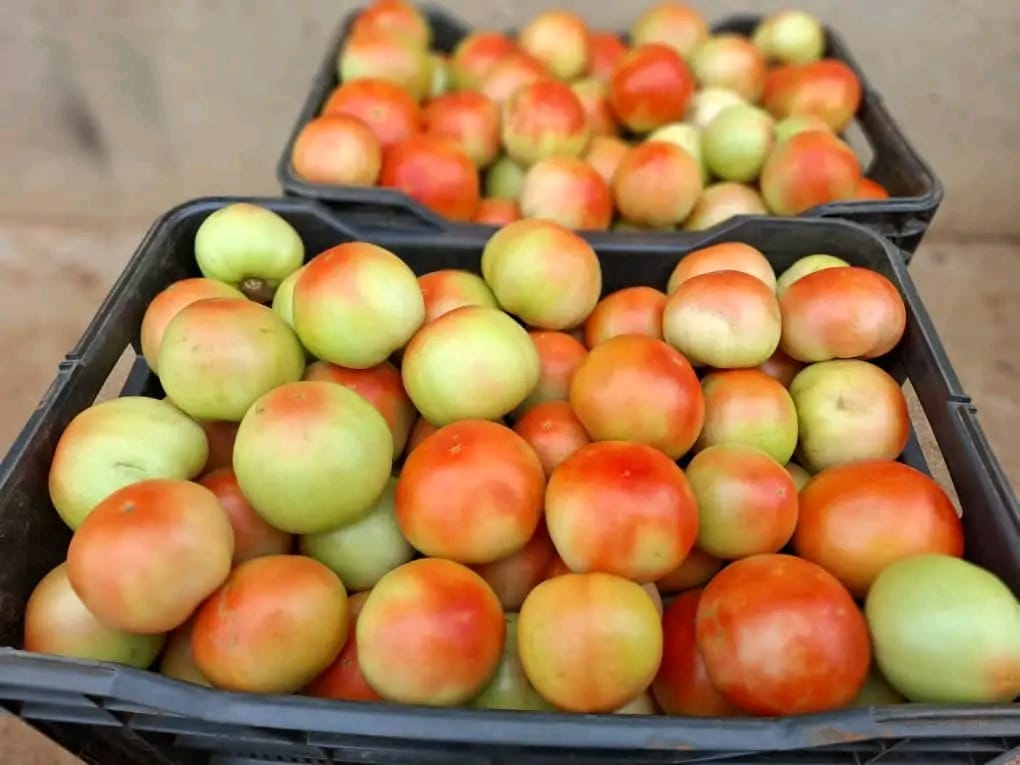
MANZINI — Traders will have to source 80% of their table tomatoes locally before importing the remaining 20% from 25 September 2026, after NAMBoard found that domestic supplies of tomatoes, beetroot and green pepper had increased.
The National Agricultural Marketing Board has revised its temporary import restrictions under the NAMBoard Act, sharply raising the local sourcing requirement for round and gem table tomatoes, excluding cherry tomatoes, from 25% to 80%.
The notice also requires traders to source at least 15% of beetroot and 20% of green pepper locally before importing the balance. Traders must provide evidence that the local portion has been sourced, while participating farmers must be registered with NAMBoard.
The measures will remain in place while local production can meet the prescribed share of demand, with NAMBoard saying stocks will be continuously monitored.
TOMATO SUPPLY BOUNCES BACK
The decision marks a significant turnaround for tomatoes.
In July, NAMBoard allowed increased imports after frost damaged standing crops and pushed local tomato availability below demand. At the time, traders were required to source only 25% locally before importing the balance.
By August, the picture had changed sharply.
NAMBoard’s latest Area Planted Report, using information captured through the Eswatini Horticulture Information System (EHIS) up to 31 August, recorded 9.21 hectares of tomatoes planted against estimated monthly demand of 6.34 hectares, equivalent to 145%.
Beetroot reached 6.34 hectares against an estimated demand of 7.26 hectares, or 87%, while green pepper stood at 1.80 hectares against 2.17 hectares, or 83%.
The figures help explain the tighter import controls, but they also carry a warning for farmers. Planting data is an indication of future supply, not a guarantee that every crop will reach the market, while weather, disease and yields can change the final volumes available.
EHIS FARMERS GET PRIORITY
NAMBoard Marketing and Communications Specialist Lwandile Maseko said registered farmers would be prioritised when traders look for produce to meet the new requirements.
“Farmers registered with NAMBoard through the Eswatini Horticulture Information System (EHIS) will be prioritised for local sourcing opportunities under these commodities. Traders are encouraged to engage EHIS-registered farmers when meeting the applicable local sourcing requirements,” Maseko said.
For farmers, this means EHIS registration is increasingly becoming a route into formal market opportunities.
If a trader needs 100 units of qualifying table tomatoes, for example, 80 must first be sourced locally before the trader can import the remaining 20. EHIS gives NAMBoard visibility of registered farmers, their crops and production, making it easier to connect traders with available local supply.
Registration, however, does not guarantee a sale. Farmers still need to meet buyers’ requirements for quality, volumes, timing and consistency.
FARMERS WARNED AGAINST PLANTING BLINDLY
The new restriction creates greater space for domestic produce, but it should not be interpreted as a signal for farmers to rush into tomatoes.
August tomato plantings were already 45% above NAMBoard’s estimated monthly requirement. Beetroot and green pepper were also relatively close to estimated demand.
This makes production planning particularly important. More farmers planting the same crop in response to the restriction could eventually create oversupply, putting pressure on prices and leaving some growers without buyers.
Speaking previously on market opportunities for local vegetable growers, Eswatini National Agricultural Union (ESNAU) CEO Tammy Dlamini said farmers needed more than encouragement to increase production.
“Farmers are willing to produce, but profitability depends on more than planting. They need access to affordable inputs, irrigation, finance, technical advice and reliable market information.”
ESNAU has consistently argued that stronger market connections, finance, infrastructure and technical support are necessary if increased agricultural production is to remain commercially viable.
MORE MARKET SPACE, BUT NOT A GUARANTEED MARKET
The revised restrictions are an import-substitution measure: when sufficient produce is available locally, traders must buy a prescribed portion from domestic farmers before looking outside the country.
For growers, that creates an opportunity to capture a larger share of money already being spent on vegetables.
But the August figures also demonstrate why the system must be managed carefully. The objective is not simply to replace imports with more production. It is to align what farmers plant, when they harvest and what the market can absorb.
The immediate message for tomato, beetroot and green pepper growers is therefore clear: register production through EHIS, check current planting and demand information, engage buyers and extension officers, and establish the market before expanding production.