
…World Meteorological Organization forecasts exceptionally strong Pacific Ocean warming between October and December, putting Southern African farmers on alert over rainfall uncertainty, rising temperatures and potential agricultural losses.
BY: PHESHEYA KUNENE| EDITOR
MANZINI — Eswatini farmers are being urged to prepare for a potentially difficult agricultural season following a warning by the World Meteorological Organization (WMO) that El Niño could intensify to record strength by December 2026, raising concerns over drought, extreme heat, crop production and livestock water supplies.
The warning comes at a critical time for the country’s agricultural sector as farmers prepare land, purchase seed and fertiliser, and make planting decisions ahead of the main summer rainfall period.
According to the WMO’s Global Seasonal Climate Update issued on 8 October, sea-surface temperatures in the central and eastern tropical Pacific are forecast to reach approximately 3.7°C above average during October to December 2026, potentially exceeding the previous recorded peak of 2.6°C associated with the 2015/16 El Niño event.
Such exceptionally strong conditions are popularly described as a Super El Niño, although the expression is not an official WMO classification.
The projected temperature anomaly refers to Pacific Ocean waters rather than an equivalent increase in air temperatures in Eswatini.
Nevertheless, the development has significant implications for agriculture because El Niño can disrupt atmospheric circulation, shift rainfall patterns and increase the likelihood of unusually warm conditions across many regions.
SOUTHERN AFRICA BRACES FOR RAINFALL UNCERTAINTY
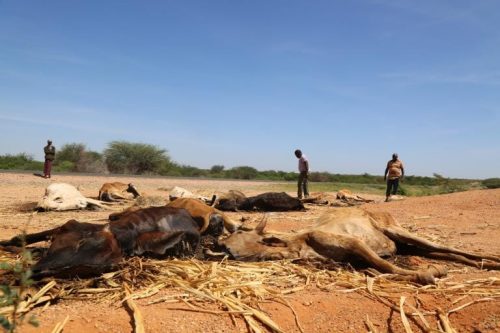
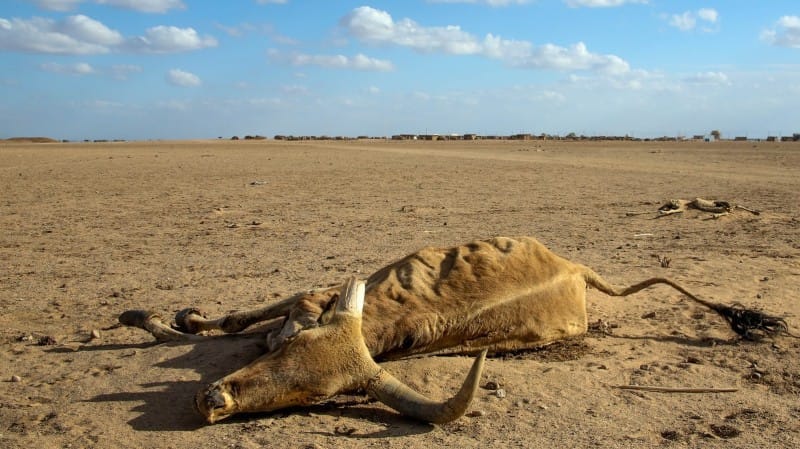
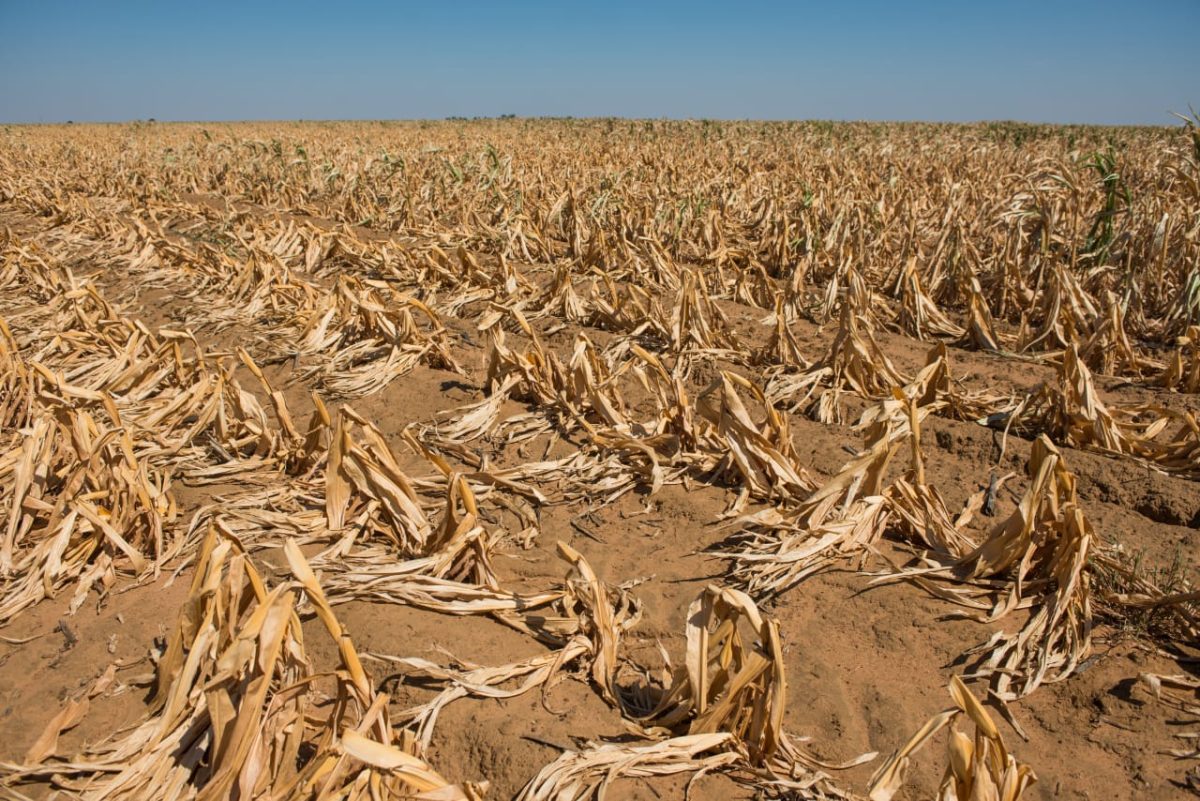
Southern Africa has experienced severe drought during previous strong El Niño events, including the 2015/16 agricultural season, when poor rainfall affected crop production, livestock and water availability across the region.
The Food and Agriculture Organization of the United Nations (FAO), reporting on the Southern African Regional Climate Outlook Forum held in August, indicated that below-normal rainfall was favoured across much of central and southern Southern Africa during the 2026/27 season.
Above-normal temperatures were also expected across much of the subregion.
For Eswatini, the combination presents a concern for maize, beans, vegetables, sugarcane and livestock production.
Higher temperatures increase evaporation and crop water requirements, while irregular rainfall can disrupt germination, flowering and grain development.
However, climate experts caution that El Niño does not automatically translate into drought in every location.
Rainfall outcomes vary according to regional weather systems, local geography and the timing of seasonal rainfall. Some areas may experience useful rainfall, while others could face extended dry spells or occasional intense storms.
Farmers are therefore encouraged to follow national seasonal and short-term forecasts rather than assume that the entire growing season will be dry.
MINISTRY URGES FARMERS TO PREPARE AND ADOPT SMART FARMING
Ministry of Agriculture Acting Director Nikiwe Dlamini has previously encouraged farmers to prepare their fields early and adopt climate-smart agricultural practices to reduce their vulnerability to unfavourable weather conditions.
Dlamini advised farmers to consider early-maturing crop varieties capable of completing their growing cycle before prolonged dry conditions develop.
“We urge farmers to start planting as early as the first rains and plant seeds that will mature within a period of 90 to 100 days,” she said.
Her recommendations included mulching to retain soil moisture, staggered planting to spread production risks and appropriate fertiliser management.
These practices are particularly relevant during seasons characterised by uncertain rainfall.
However, farmers should distinguish between the first showers and sufficient effective rainfall for successful crop establishment. Agricultural extension officers can help determine appropriate planting times based on soil moisture and local forecasts.
The ministry’s advice reinforces a growing emphasis on agricultural systems that use water more efficiently, protect soil fertility and reduce unnecessary production losses.
ESNAU CONCERNED ABOUT RISING FARMING COSTS
The threat of a stronger El Niño comes as farmers are already facing rising agricultural production costs.
Eswatini National Agricultural Union (ESNAU) Chief Executive Officer Tammy Dlamini has previously expressed concern about the financial pressures confronting producers, particularly the rising costs of fertiliser, livestock feed and transport.
Dlamini warned that imported agricultural inputs could become increasingly expensive, affecting farmers’ ability to maintain production.
“The biggest impact could be on fertiliser because most of it is imported,” he said.
The situation is especially concerning for smallholder farmers who must commit limited resources to seed, fertiliser, land preparation and labour before knowing whether the season will provide adequate rainfall.
Livestock producers face additional risks as prolonged dry conditions can reduce grazing availability and increase dependence on purchased feed.
Farmers recovering from disruptions associated with foot-and-mouth disease restrictions may be particularly exposed if grazing conditions deteriorate.
The combination of climate uncertainty and rising production costs could therefore place additional pressure on farm profitability and household food security.
FARMERS MUST CHANGE HOW THEY MANAGE WATER
Agricultural specialists increasingly recommend conservation agriculture as one practical response to rainfall uncertainty.
Methods such as Pfumvudza, which combine minimum soil disturbance, permanent soil cover and crop rotation, can help reduce moisture losses and protect soils against erosion.
Instead of repeatedly ploughing entire fields, farmers prepare designated planting stations while retaining mulch or crop residues over the surrounding soil.
This helps limit evaporation and improve the use of available rainfall.
Other recommended measures include selecting suitable drought-tolerant and early-maturing varieties, maintaining irrigation equipment, repairing water leaks and adjusting planting dates according to local conditions.
For vegetable farmers, crop selection becomes particularly important.
Crops differ in their water requirements, tolerance to high temperatures and sensitivity to moisture stress during flowering or establishment.
Farmers should therefore assess whether their available water supplies can support the crops they intend to grow throughout the production cycle.
Planting large areas without reliable irrigation or adequate rainfall information could expose producers to significant financial losses.
LIVESTOCK FARMERS ALSO FACE GROWING RISKS
The consequences of a severe dry season would extend beyond crop production.
Livestock farmers depend on natural grazing, surface water, boreholes and supplementary feed to maintain animal health and productivity.
Prolonged dry conditions can reduce pasture growth, increase competition for available grazing and weaken livestock body condition.
The FAO has identified livestock feed, water access, animal health services and early warning systems among the important interventions for reducing agricultural losses during El Niño-related drought conditions.
Farmers are encouraged to assess grazing capacity, preserve fodder where possible and plan supplementary feeding before shortages become critical.
Early livestock management decisions can reduce the risk of distress sales, animal losses and rising feeding costs.
FARMERS ADVISED NOT TO ABANDON PRODUCTION
Despite the concerning forecast, agricultural authorities have cautioned against abandoning farming activities.
National Disaster Risk Management Agency Director Victor Mahlalela has stressed the importance of maintaining agricultural production even when seasonal conditions appear unfavourable.
“It is better to take the risk and fail than not to try at all,” he said.
The message reflects the difficult balance facing Eswatini: farmers must manage climate risks without undermining national food production.
Eswatini Meteorological Service Director Duduzile Nhlengetfwa has similarly encouraged farmers to work closely with agricultural extension officers when deciding what crops to plant.
The challenge is not simply whether farmers should plant, but how they can produce more efficiently under uncertain weather conditions.
That requires reliable climate information, suitable seed, access to water, agricultural extension support and practical financial planning.
EARLY ACTION COULD DETERMINE THE HARVEST
The latest WMO warning underscores the importance of preparedness at both farm and national levels.
For farmers, immediate priorities include preparing fields, conserving soil moisture, choosing suitable seed varieties, protecting irrigation water and monitoring weather forecasts.
For government and agricultural institutions, the challenge is to ensure that early warning information translates into practical support before farmers suffer losses.
Access to affordable agricultural inputs, irrigation infrastructure, extension services and emergency livestock support could become increasingly important if dry conditions intensify.
The projected strength of El Niño is concerning, but it does not determine the outcome of every harvest.
Actual agricultural impacts will depend on rainfall timing, temperature, soil conditions, water availability and how effectively farmers respond.
The Super El Niño warning may originate in the Pacific Ocean, thousands of kilometres from Eswatini, but its consequences could be felt in the country’s fields, grazing lands and irrigation schemes.
The forecast is a warning. The harvest is not yet decided.