

BY: PHESHEYA KUNENE | EDITOR
MANZINI — Local nursery operators have backed NAMBoard’s push to register and certify nurseries, but say higher standards must come with financial support and access to markets if the country wants them to produce quality seedlings that can compete with those sourced from South Africa.
The nursery owners say they are ready to be regulated and held accountable for the seedlings they supply to farmers. However, with the cost of seeds and other production inputs rising, they want the Government and NAMBoard to consider subsidies, technical support and market development, arguing that compliance should strengthen their businesses rather than simply add another layer of costs.
Their position emerged during the Seedling Nursery Registration Awareness Workshop at Alcon House in Manzini, where NAMBoard, the Department of Agricultural Research, nursery operators, extension officers and plant health officials discussed registration, chemical use, traceability and improved nursery production standards.
QUALITY STARTS AT THE NURSERY
NAMBoard Chief Executive Officer Bhekizwe Maziya said registering nurseries was critical for quality assurance and ensuring operators followed appropriate production and safety standards.
Maziya raised concern about chemical residues and the potential impact they can have on crop production and market access. The registration drive is therefore intended to improve accountability and traceability from the point where seedlings are produced.
That matters beyond the farm gate. Eswatini’s National Plant Health Inspectorate Services, NaPHIS, is responsible for plant health controls, including nursery registration and inspection, while phytosanitary certification is central to facilitating safe trade in plants and plant products.
For farmers targeting demanding domestic and export markets, the implication is straightforward: quality assurance cannot begin when vegetables are harvested. It must begin with the planting material.
NURSERIES WANT SUBSIDIES TOO
But nursery operators say producing that quality comes at a price.
George Marrime of Marrime Nurseries welcomed the registration initiative, saying it could help strengthen confidence in locally produced seedlings and eventually improve opportunities for nurseries and farmers to access wider markets.
His concern is the rapidly rising cost of production, particularly seed.
Marrime called for nurseries to receive financial support similar to assistance available to farmers. He argued that if Government and NAMBoard expect nurseries to produce seedlings using the correct inputs, chemicals and production practices, they should consider meeting operators halfway.
The argument is essentially one of incentives: higher standards require investment.
A nursery has to buy seed, growing media and crop protection products while paying for water, labour and infrastructure before it sells a single seedling. Registration without a viable business model could therefore leave smaller operators struggling to meet the standards expected of them.
Marrime also challenged fellow nursery operators to follow correct production practices and avoid “dodgy dealings” that could undermine confidence in the entire industry.
‘TRUST LOCAL NURSERIES’
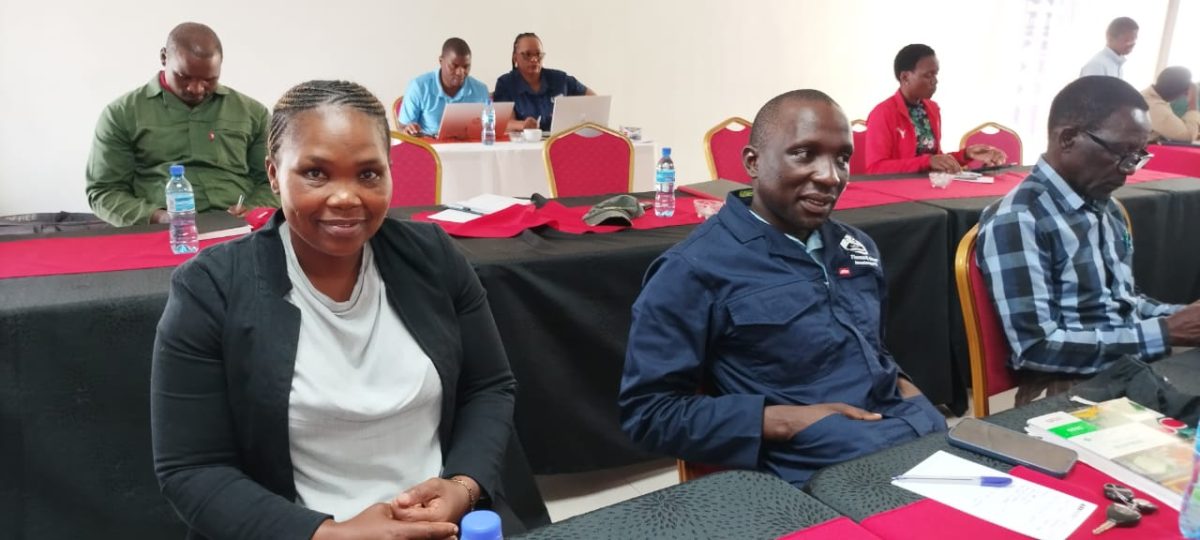
Nosizo Mmema-Ngwenya, owner of GreenWay Farms Nursery in Mpolonjeni, believes local producers should also be given a fair chance.
She said farmers frequently look to South Africa for seedlings even though local nurseries are capable of producing quality planting material.
Her message to farmers is simple: trust local nurseries and give them an opportunity to prove themselves.
Mmema-Ngwenya said nursery operators were prepared to work with NAMBoard, accept regulation and receive guidance that would help them improve standards.
If that relationship works, the potential benefit is bigger than individual nurseries. A stronger local nursery industry could shorten farmers’ supply chains, improve traceability and retain more agricultural spending inside Eswatini.
BUT WHO IS RESPONSIBLE FOR CONTAMINATION?
The workshop also exposed a more difficult disagreement.
Some nursery operators pushed back against suggestions that chemical residue or contamination found later in produce should automatically be blamed on seedlings.
They argued that there are several points between the nursery and the consumer where produce can be compromised. Concerns were raised about vegetables being transported uncovered, people being carried alongside produce, smoking near produce and the conditions under which some vendors handle and store fresh vegetables.
These were concerns raised by nursery operators at the workshop, rather than evidence establishing the source of particular contamination incidents.
Their wider argument, however, strengthens the case for traceability across the entire horticultural value chain. If a problem is detected, authorities should be able to establish whether it originated at the nursery, on the farm, during chemical application, in transport, at the market or during storage.
Nursery operators themselves acknowledged that their industry is not perfect. Participants conceded that some nurseries may use chemicals incorrectly or fail to observe recommended production practices.
That is precisely where registration, inspection and training could make a difference.
WHAT DOES THE NURSERY GET IN RETURN?
NAMBoard SHERQ Manager Ncobile Gama urged operators to register, stressing that there are benefits to operating within a recognised and regulated system.
Nursery owners now want those benefits to become visible commercially.
Their request goes beyond subsidies. They want NAMBoard to help develop markets for registered nurseries, promote confidence in locally produced seedlings and create a system where meeting higher standards gives compliant businesses a commercial advantage.
For farmers, that could make registration meaningful. A registered nursery should increasingly represent a supplier whose production site can be traced, whose practices can be inspected and who can be held accountable when problems arise.
For nursery owners, certification should ideally become something the market values rather than merely another administrative requirement.
FROM REGULATION TO BUSINESS OPPORTUNITY
There is a bigger opportunity behind the debate.
If local nurseries can consistently produce healthy, traceable seedlings to recognised standards, Eswatini could reduce dependence on seedlings sourced outside the country while strengthening the foundation of its horticulture industry.
Higher standards could also support farmers seeking more demanding markets because plant health and traceability become increasingly important when agricultural products cross borders.
But certification alone will not achieve that.
Nurseries will have to improve production practices. Farmers will have to support reliable local suppliers. NAMBoard and plant health authorities will have to enforce standards consistently. And the industry will need markets capable of rewarding businesses that invest in quality.
That is why the message from nursery operators in Manzini was not a rejection of regulation.
It was a call for a bargain: register us, regulate us and demand quality from us, but help us afford that quality and build a market for what we produce.